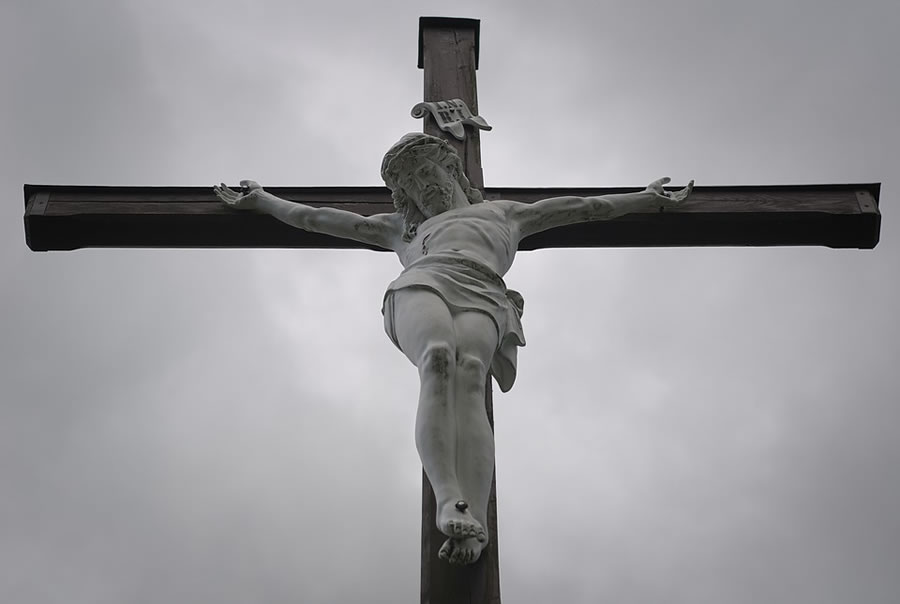
"Get behind me, Satan!" (Matthew 16:23)
by Fr. Thomas Kagumisa | 08/27/2026 | Weekly ReflectionEsteemed parishioners of the Blessed Sacrament and Visitors,
After Peter publicly declared his faith in Jesus, as we heard in last Sunday's Gospel, Jesus told His disciples that He needed to go to Jerusalem to suffer at the hands of the elders and chief priests and ultimately be killed. Peter took Jesus aside and began to rebuke Him, saying, "God forbid it, Lord!" (Matthew 16:22). In this instance, Peter's human weakness was evident.
Continue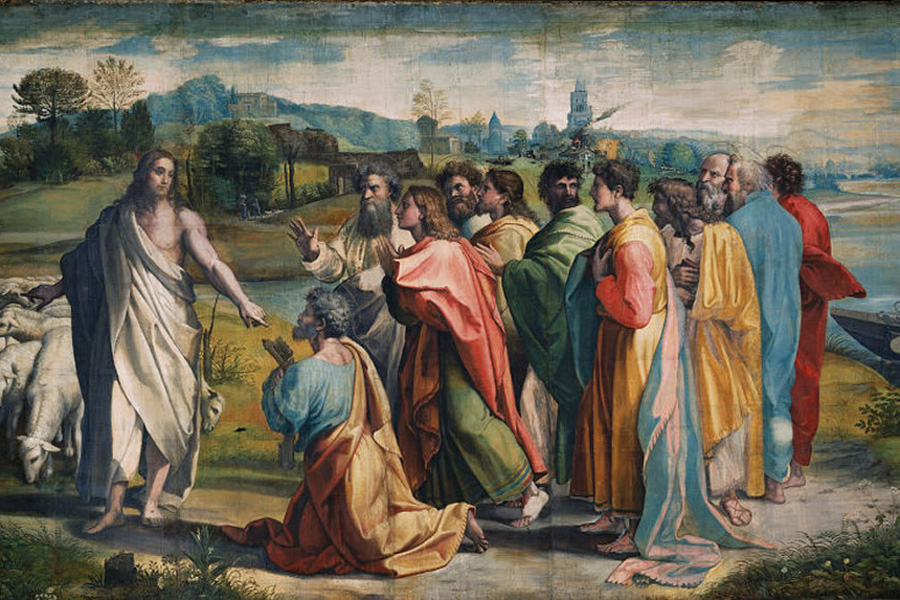
Coming to Really Know Jesus
by Dcn Bob Evans | 08/20/2026 | Weekly ReflectionWe don’t know why Jesus had His disciples go to Caesarea Philippi; we don’t know what took place there. We only know of the profound exchange that took place on their return between Jesus and Peter, which we hear about in this week’s Gospel reading [cf. Matthew 16:13-20].
Caesarea Philippi was a mountain resort town at the foot of Mount Hermon, about fifteen miles north of the Sea of Galilee. It was a popular destination for the Roman elite.
Continue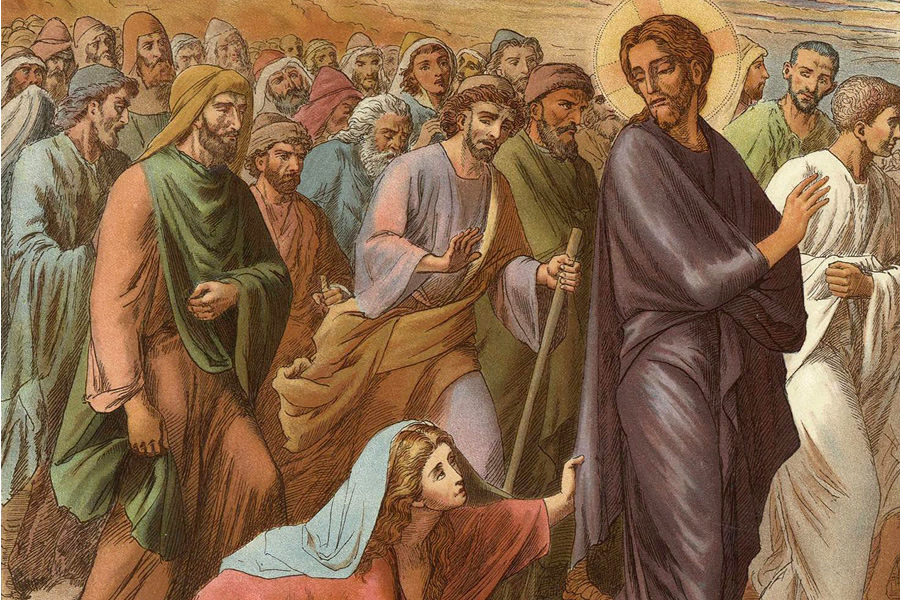
Great is Your Faith
by © LPi Fr. John Muir | 08/13/2026 | Weekly ReflectionDoes God ignore or act a bit rough with you? Jesus crosses the border into the pagan region of Tyre and Sidon, the territory long outside the covenant. There, a Canaanite woman calls out, "Have pity on me, Lord, Son of David." At first, he is silent. Then he rebuffs her. "It is not right to take the food of the children and throw it to the dogs." But the Church Fathers saw this not as an insult but as an initiation. Christ draws out of her heart a deeper faith.
Continue
Why is the Large Church Bell Important for Our Parish?
by Fr. Thomas Kagumisa | 08/06/2026 | Weekly ReflectionFellow parishioners of Blessed Sacrament and visitors,
Greetings from Bukoba, Tanzania! After a well-deserved vacation in my home country, I am glad to be back to continue our joint efforts in building the kingdom of God at this beautiful parish. I am particularly grateful to our beloved Associate Pastor, Rev. Fr. Samuel Aliba, the parish staff, volunteers, and each individual parishioner for keeping our parish thriving during my absence.
Continue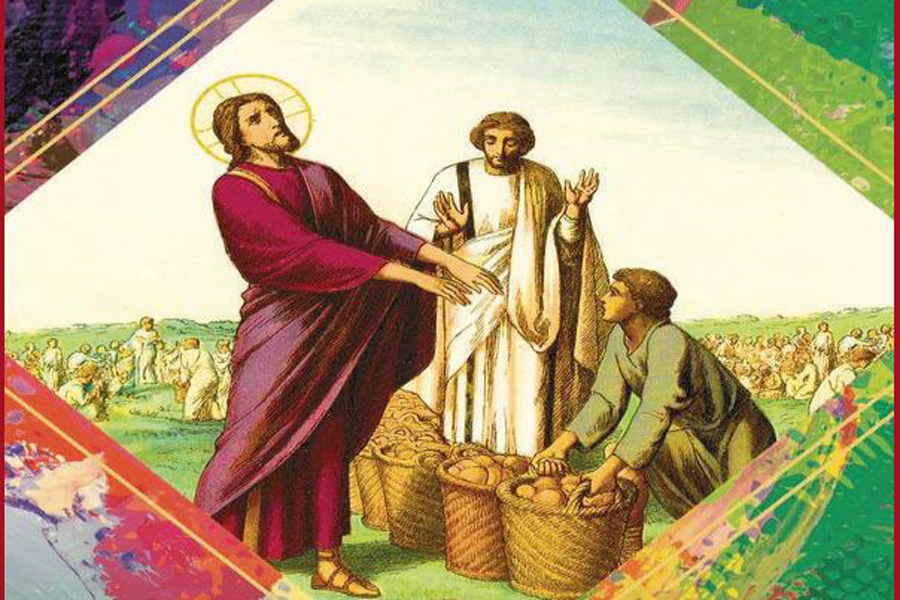
Meditations: 18th Sunday in Ordinary Time (Year A)
07/30/2026 | Weekly ReflectionTODAY, the evangelist Matthew tells us that the crowds were eagerly seeking our Lord. They hungered for his preaching and miracles so greatly that, when they finally found Him, they listened to him happily until sunset. On one of those occasions, the apostles suggested to Jesus that He send the people away before nightfall so they could find somewhere to buy food for their journey home. But our Lord, moved by those hearts that were so eager for his word, didn't want to let them go without giving them one last gift.
Continue
Being All In
by Dcn Bob Evans | 07/23/2026 | Weekly ReflectionIn this week's reading from St. Matthew's Gospel, we hear two parables about the Kingdom of Heaven [cf. Mt 13:44-52]. Unfortunately, we are not hearing what led up to Jesus sharing these two parables. To understand the point Jesus was making, we need to consider the context in which Jesus was speaking.
This episode began in the town of Magdala. It was late afternoon and Jesus asked any who would follow Him to sail across the Sea of Galilee to the eastern shore [cf. Mt 8:18, Mk 4:35, Lk 8:22].
Continue
The Small but Mighty Mustard Seed
by Michael Moore OMI | 07/16/2026 | Weekly ReflectionLast Sunday in our readings, we heard the message that the word of God is a seed that is sown in us. With God's help, we are to nurture and nourish this seed so that it produces fruit and fruit that will last. This Sunday's Gospel continues this theme and message.
For us today who live in cities, housing estates, and tower blocks, it can be difficult to understand and appreciate the farming language that Jesus uses when he speaks.
Continue
The Seed Sown on Rich Soil
by © LPi Fr. John Muir | 07/09/2026 | Weekly ReflectionSometimes I feel capable of absorbing almost anything except God's Word. My mind soaks up song lyrics, sports trivia, and endless online content. But what was the reading at Mass this morning? I struggle to recall. That realization discourages me, and it leads to an uncomfortable question. What is my heart really for? Is it shaped for constant information and distraction, or is it truly designed for God? Am I capable of deeply receiving His Word?
Continue
“Come to Me, All Who Labor and Are Heavy Laden, and I Will Give You REST,” (Matthew 11:28)
by Fr. Thomas Kagumisa | 07/02/2026 | Weekly ReflectionDear Parishioners of Blessed Sacrament and Visitors,
Jesus speaks of a yoke and a burden. The "yoke" refers to part of the harness used to pull a cart, plow, or mill beam. This instrument was how an animal's master kept them under control and guided them in useful work. Over time, the term "yoke" came to be used metaphorically for submission, typically to a teacher. However, Jesus' use of the metaphor here carries a deeper meaning.
Continue
What are We to Do?
by Dcn Bob Evans | 06/25/2026 | Weekly ReflectionIn our First Reading this week, from the 2nd Book of Kings, [2 Kgs 4:8-17] we hear the story of Elisha, the prophet, and the woman in the town of Shunem. On first hearing, it sounds like a nice story of an old woman who is rewarded for her generosity. But there is more to the Old Testament than nice stories, there are profound lessons as well.
The Book of Kings is from the portion of the Old Testament that is known as the Deuteronomistic Writings. The word, Deuteronomy, means "the second telling."
Continue
Meditations: 12th Sunday in Ordinary Time (Year A)
06/18/2026 | Weekly ReflectionThe apostles' fear
OUR LORD is preparing his disciples for their first apostolic mission. The Twelve are about to leave for the neighboring towns to announce the coming of the Kingdom of God. But before they depart, they hear words from Jesus that, at first glance, seem disconcerting. He foretells that sooner or later they will suffer hatred, persecution, and even death.
ContinueMeditations: 11th Sunday in Ordinary Time (Year A)
06/11/2026 | Weekly ReflectionRemembering the joy of encountering God
WHEN the Israelites camped in front of Mount Sinai, Moses began ascending the mountain to speak with God. The Lord, who had witnessed the doubts and difficulties Israel faced after fleeing Egypt, reaffirmed the covenant He had established with his people: "If you will obey my voice and keep my covenant, you shall be my own possession among all peoples; for all the earth is mine, and you shall be to me a kingdom of priests and a holy nation."
Continue
"My Flesh is true food, and my Blood is true drink" (John 6:55)
by Fr. Thomas Kagumisa | 06/04/2026 | Weekly ReflectionEsteemed parishioners of Blessed Sacrament and visitors,
Today is the Solemnity of the Most Holy Body and Blood of Christ, historically referred to by its Latin name, Corpus Christi. This solemnity celebrates the Real Presence of Jesus Christ in the Holy Eucharist-Body, Blood, Soul, and Divinity. As a community named after this sacred sacrament, this day holds special significance for us.
Continue